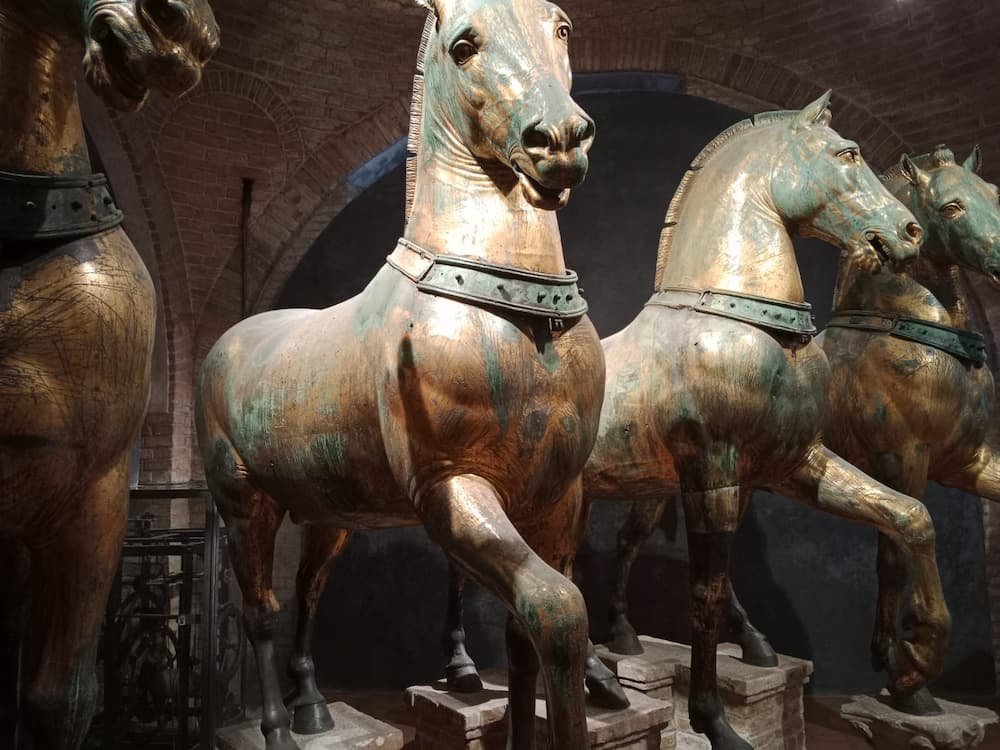
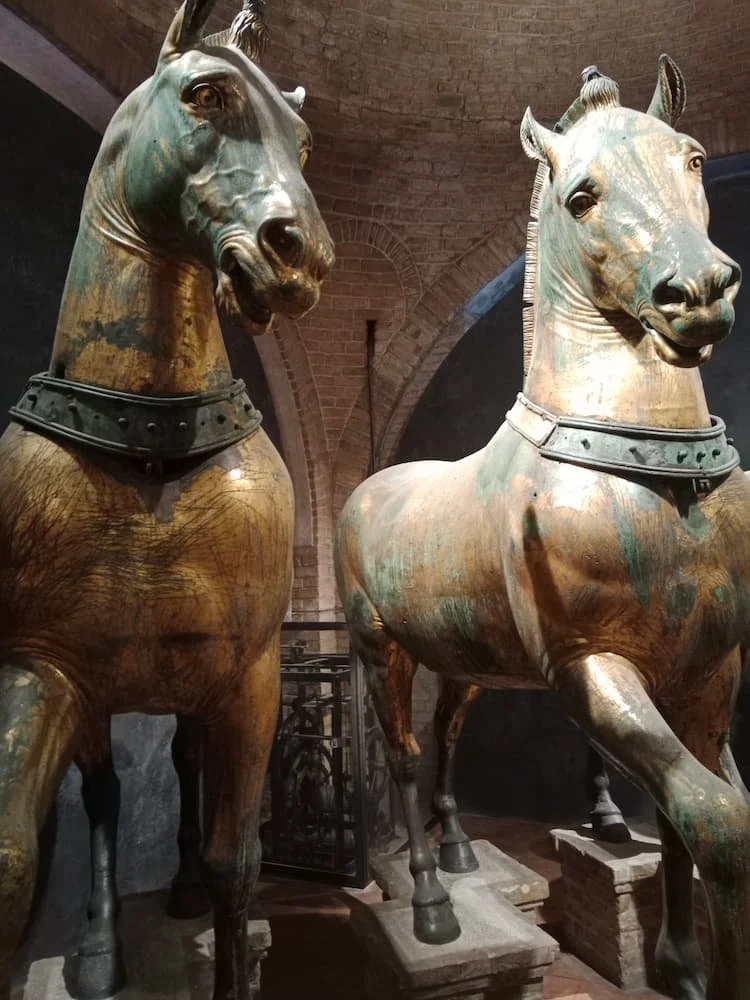
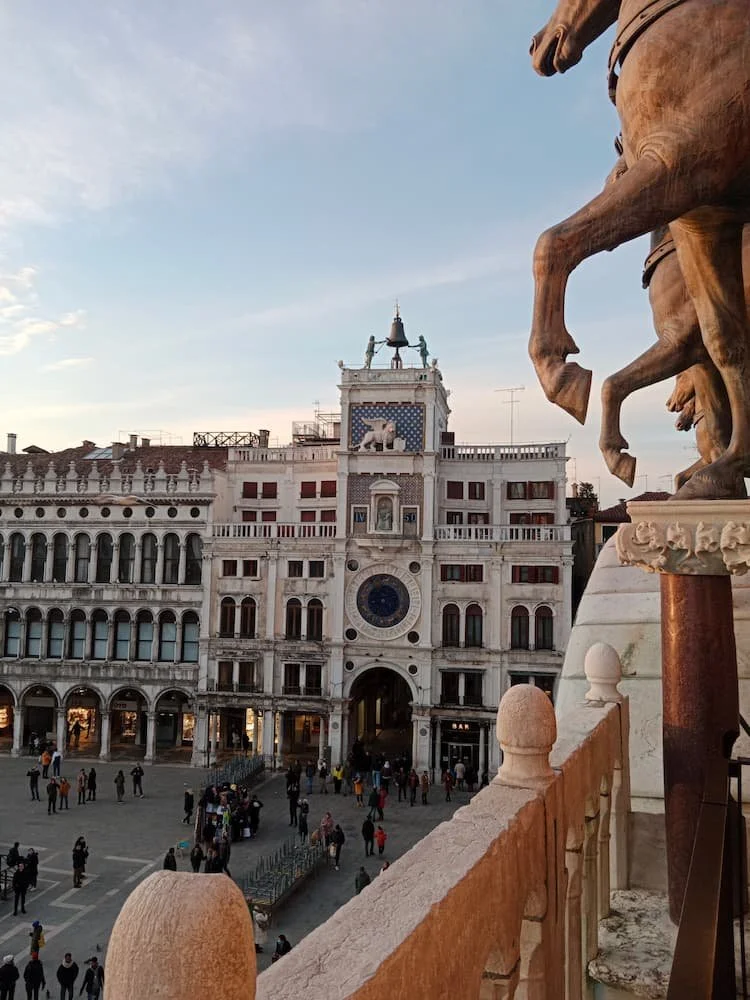
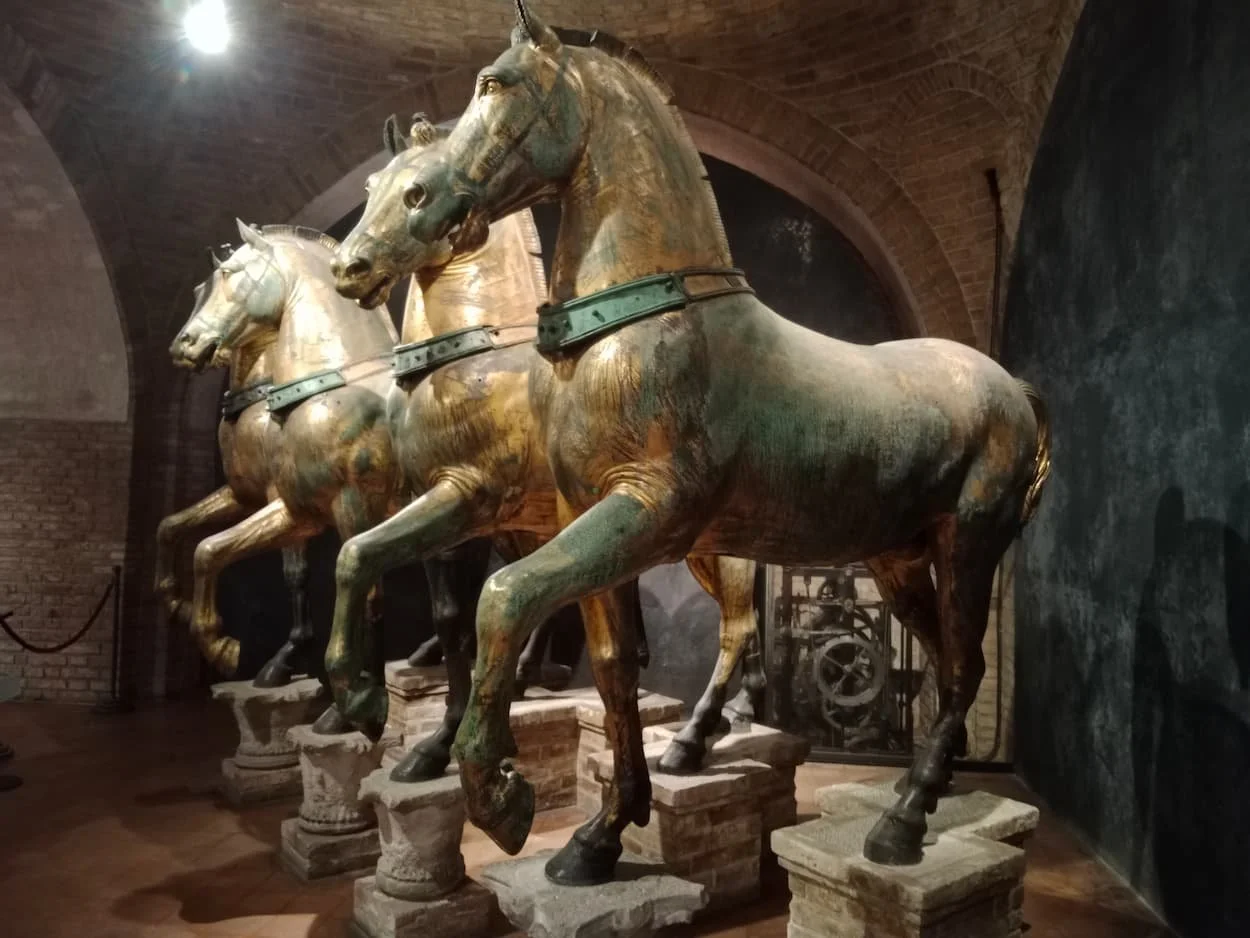
The original bronze quadriga is safely housed in the museum at St. Mark’s Basilica in Venice, Italy.
I know I dreamed you
A sin and a lie
I have my freedom
But I don′t have much time
Faith has been broken
Tears must be cried
Let′s do some living
After we die
Wild horses
Couldn't drag me away
Wild, wild horses
We′ll ride them someday
Wild horses
Couldn't drag me away
Wild, wild horses
We′ll ride them someday
Wild Horses, The Rolling Stones
They say history teaches many things. Among them, I’ve learned, is that some history can break your heart; and, for me, the tale of how the horses of St. Mark’s came to grace that splendid Basilica did just that.
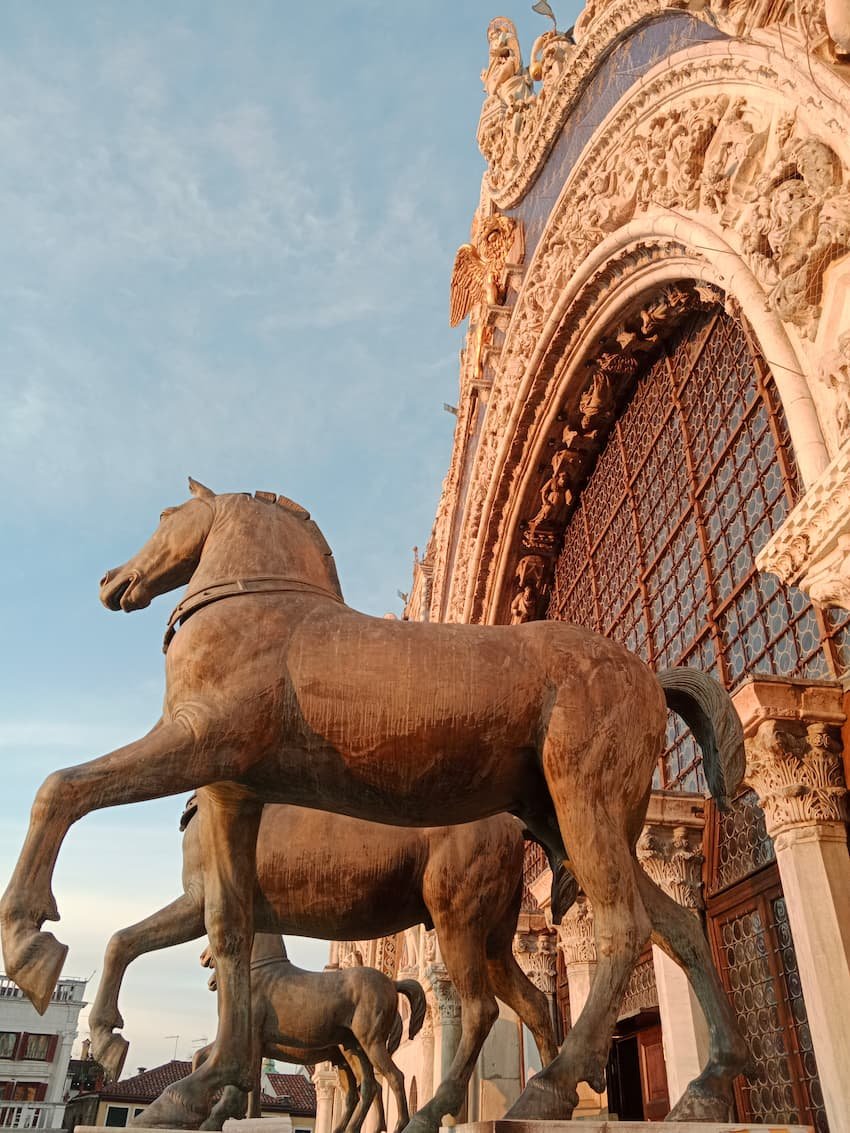
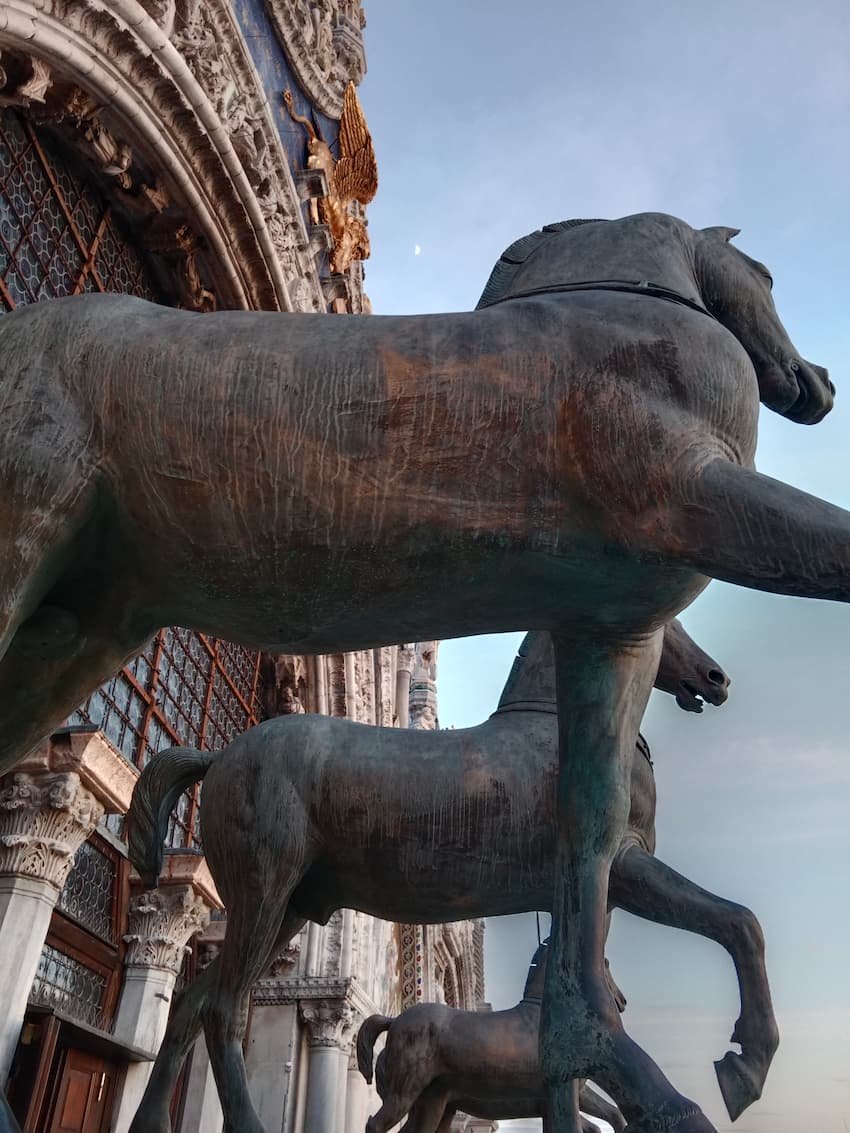
Known as the Quadriga, the four stately horses mounted above the entrance to St. Mark’s are perhaps among the most recognizable statues in the world. But this wasn’t always their home. Like so much of the art that graces the Floating City, these horses came from elsewhere—stolen booty that began their long journey to Venice from a great city to the east.
But before I tell you how they wound up in Venice, first I want to tell you about the glorious city they once called home—and indeed, glorious is an appropriate term. For the great city is the one and only Constantinople.
“Quadriga (kwahd-REE-guh)
Derived from the Latin word quadri, for four, and iugum, for yoke. The word quadriga refers to a car or chariot drawn by four horses, although in Latin the term normally refers exclusively to the team of horses.”
Established as a Greek settlement in the seventh century BCE, Constantinople was first known as Byzantium and later as New Rome before being named after Roman Emperor Constantine I. At its height, the city served as no less than the capital and holy city of the largest population in the Western world, and as a cradle of the Christian faith, complete with a repository of holy relics and an Imperial Library that held more than 100,000 volumes. If you wanted job security in Constantinople, you worked for the library!
And hidden within this great city were untold treasures.
It is said of Constantinople that it once held more art within its walls than all of the cities of Europe combined. As the beating heart of art and Christianity and the apex of what was then considered the "civilized world," art—particularly religious Byzantine art—was on full display in every corner. The Hagia Sophia was bathed in shimmering gold glass mosaics that reflected light like hundreds of thousands of tiny mirrors. The Column of Constantine, at the time a staggering fifty meters tall, lorded over the masses from its stance on the second-highest of the city’s seven hills. Opulent palaces shared the skyline with a colossal bronze statue of Hercules created by Lysippos, and the muted, softened domes of the Church of the Holy Savior, their interiors blanketed with theatrical frescoes that glinted like candlelight. But for all this magnificence and pomp, there was a structure without equal: the Hippodrome.
Completed under Constantine the Great, this vast arena could, at its peak, hold up to 60,000 people or more. Four hundred and fifty meters long and roughly four hundred and thirty feet wide, this monolith was capable of fitting ten modern-day football fields inside its vast space. A stadium primarily for chariot racing, it’s impossible not to imagine the sheer spectacle of it all: the plumes of dust kicked up by the horses' hooves as they thundered around the track, perhaps cheered on by the Emperor himself, alongside the roar of the crowd. Moored in the middle of the stadium like a sliver of land in an open sea sat the spina, or central island.
Upon the raised vertebrae of this spina stood a procession of lavish works of art. Among them was a bestiary that included no less than a dragon, a lion, a set of sphinxes, and a giant goose, alongside the Obelisk of Theodosius (a titanic pink granite obelisk from Luxor, Egypt), the Serpent Column (a victory tripod bathed in bronze from the Temple of Apollo at Delphi), and a Walled Obelisk gilded in bronze. But the jewel of all the Hippodrome—the loveliest and most treasured of all these artistic expressions of the human heart and spirit—was the Quadriga. I have read conflicting accounts of where these magnificent horses were mounted: some say the Emperor’s Box; others say atop the upper level of the triumphal arched entrance gate known as the Carceres. I’m not at all sure that it matters; either seems a suitable spot for these magnificent creatures.
Imagine them: Four life-sized bronze horses, gilded in gold, ferociously beautiful. An expression of Constantinople’s grandness and its power—its hubris, some might say. Yet, how spectacular a sight those horses must have been for all who set eyes on them. Then came the Fourth Crusade, which stripped the Hippodrome bare, boiled its riches, and brought an end to the greatest city ever to grace Western Europe. But how?
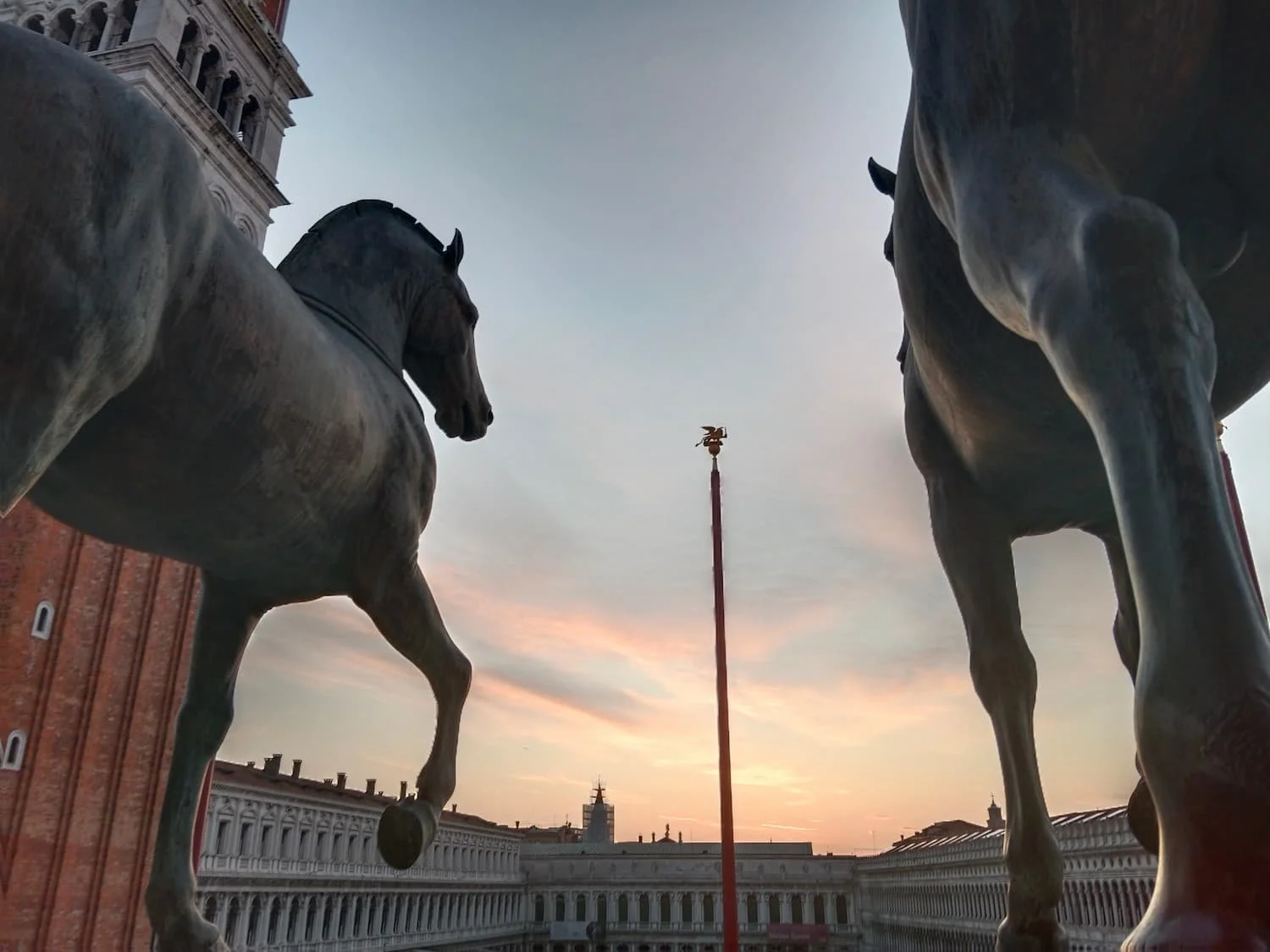
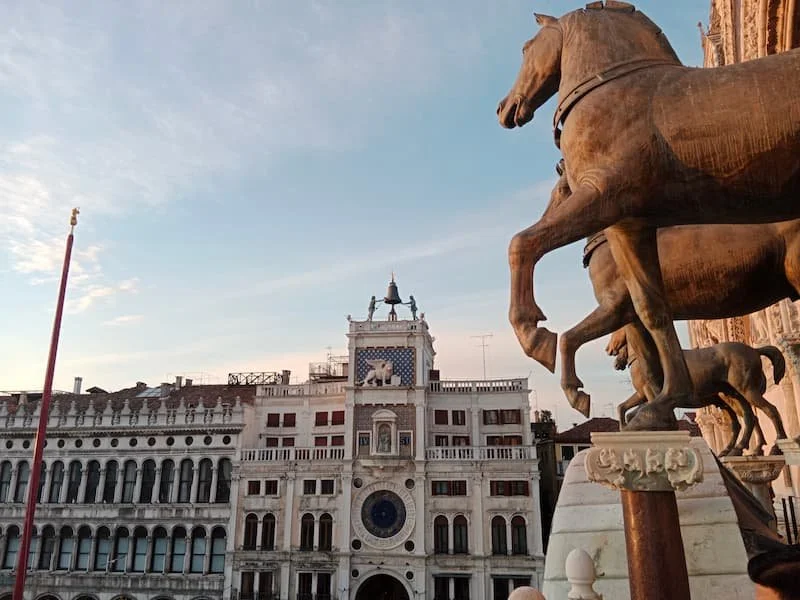
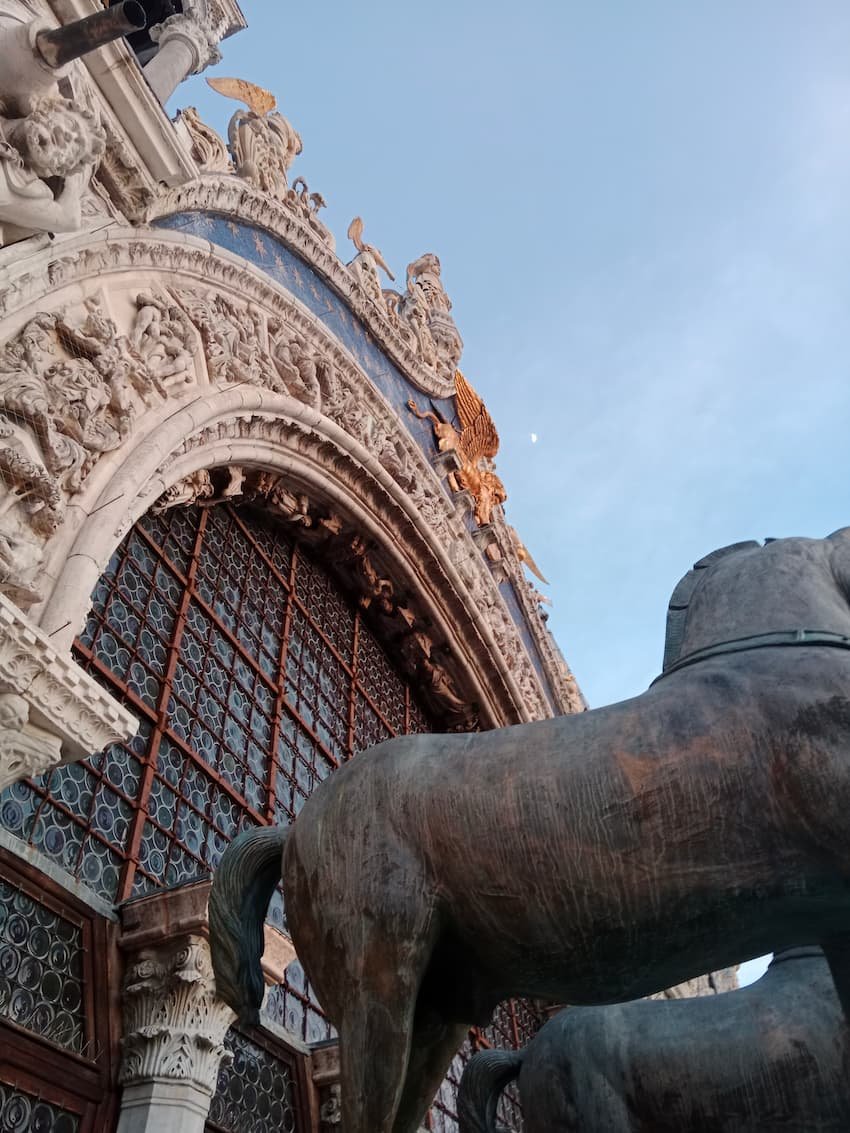
Visitors to St. Mark’s Cathedral will find replicas of the horses mounted above the entrance, which can be accessed through the museum on the second floor.
Its walls had pushed back against invaders for centuries. Arabs, Persians, Bulgarians, Russians—it feels like untold dozens tried to capture Constantinople, and none succeeded. So it’s a little more than a bit surprising that the Great City succumbed not to a legendary warrior or some mythical force, but instead to a wholly geriatric and entirely blind strategist who went by the name of Enrico Dandolo (though still very much "with it" in the kind of cruel and bloodthirsty way that only a true despot can be).
The 41st Doge of Venice, Enrico Dandolo, would have been categorized as elderly by today’s standards, but at the time, he was practically mummified. As anyone who has read about him can attest, however, age did nothing to quell the man’s rambunctious, if not sociopathic, tendencies. Instead, this opportunist found an outlet for his political and personal agenda during the Fourth Crusade, cobbling together a vicious assault on Constantinople largely by lying to his mercenaries about his true intentions. Under the pretense of setting out to rescue the Holy Land from the stranglehold of the "infidels," Dandolo instead steered his warriors, mercenaries, and hangers-on to the largest and most important Christian city in the world.
“And mounted magnificently on the emperor’s box at the head of the stadium, more lovely than nature itself, stood the four golden horses of Constantinople, the most famous animal figures ever made by man, nostrils elegantly flared, forelegs raised in postures of gentle but masterly power - cast from some alloy no man could analyse, brought from some source no man could remember, created long before by some genius whose name was forgotten.”
What followed can only be described as diabolical. Our splendid horses, along with countless other precious pieces of art, were looted from Constantinople and brought to Venice. In their original form, these stately horses wore a harness, which the Venetians promptly removed upon touchdown in the Floating City to symbolize their unfettered dominion and the independence of Venice from Constantinople and all other potential adversaries, be they real, imagined, or manufactured.
As for our priceless artworks? Today, the Obelisk of Theodosius remains an ancient reminder of the past in modern-day Istanbul’s Sultanahmet Square. The Serpent Column of Delphi and the Walled Obelisk also survived both the ages and the assault of 1204. Where the Hippodrome once stood, Google Maps shows a faint outline of the original arena. The rest of the priceless artworks were plundered by the Crusaders, stuffed into furnaces, and smelted down to make copper and bronze pennies.
It is a sad story with a sad ending—one that has been repeated over and over again throughout history. The horses that now sit above the entrance to St. Mark’s Basilica are replicas; the originals are housed in the interior museum. Armed with their terrible history, I cried the first time I viewed them up close. To imagine what these lovely pieces of art went through is difficult for me. Loved for all the wrong reasons by their captors, and never returned to the great city that birthed them, I sometimes entertain the possibility that they will be sent home—but home is no longer home. Constantinople is now modern-day Istanbul, the Hippodrome is Sultanahmet Square, and the Emperor and his people are long dead and gone.
Sometimes, even when our hearts are broken, we must move on.
Author’s note: I found it so distressing to read about the plunder of Constantinople that it took me a solid two weeks to get through the account. How I had no knowledge of this dark history beforehand is a mystery to me. But like so many surprises that happened over the course of researching and writing my book series, it sparked a burning passion for medieval history, Byzantium, and the Venetian Empire in particular.