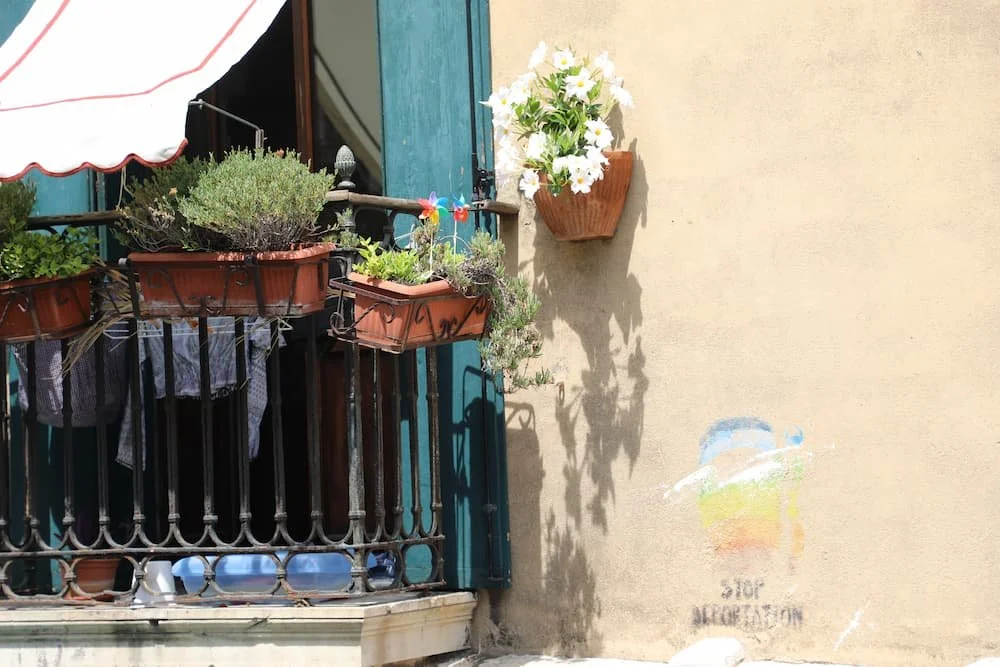
An apartment across the canal from my Cannaregio flat trumpets a “Stop Deportation” slogan written in rainbow chalk.
There was an emptiness
I think you met me at a strange time and you anchored me
I felt anonymous
And you were someone who reminded me who I used to be
It had to break, I had to go
'Cause it took me walking away to really know
I love who I see looking at me
In the mirror, in the mirror
Nothing compares to the feeling right there
In the mirror, in the mirror
~ Mirror, Sigrid
Pulling back the veil on the world’s most beautiful floating city
Two weeks before we were set to leave for Venice, my travel companion made an unlikely discovery. “Are you already packed?” they cried, pointing at the luggage perched beside my front door. Truthfully, they shouldn’t have been surprised. Years in the making, these three weeks living like a local would fulfill my dream of laying bare the world’s most beautiful city, warts and all.
My first trip to Venice took place seventeen years prior, following my mother’s death from cancer. During medieval times, mainlanders sought refuge from invaders in the lagoon. I fled to Italy to escape my memories of her suffering and the unimaginable toll it had taken on my physical and emotional health. Settling in Florence to study, I spent six months stumbling through a fog of grief; my fondest memory, a trip to Venice.
During that first meeting, I checked all the obligatory boxes: Florian for coffee, cheap mask, gelato along the Grand Canal. Refusing to feed the pigeons in St. Mark’s Square was my single demonstration of restraint. And yet, I had a gnawing sense that I’d encountered a two-way mirror behind which another city stood hidden.
As the years passed and Venice faced surmounting commercial and natural threats, I dreamed of peering behind the glass before it vanished altogether.
ENTER CANNAREGIO
Cloaked in black despite a sizzling heat wave, Francesca lingered a few paces back from the water, unmoved by my clumsy struggle to disembark the water taxi. Our point of contact for a local company specializing in short-term rental apartments, she had come to escort us to Ca’ Tintoretto: a furnished apartment inside the gothic, dusty-rose palazzo that formerly housed the celebrated 16th-century Italian Renaissance painter of the same name.
Never one to dispute the merits of equal rights, my travel companion dashed off to greet our chaperone, leaving me to steer our belongings down the lumpy cobblestone street and through a maze of tattooed locals sprawled out on some hastily arranged plastic lawn chairs.
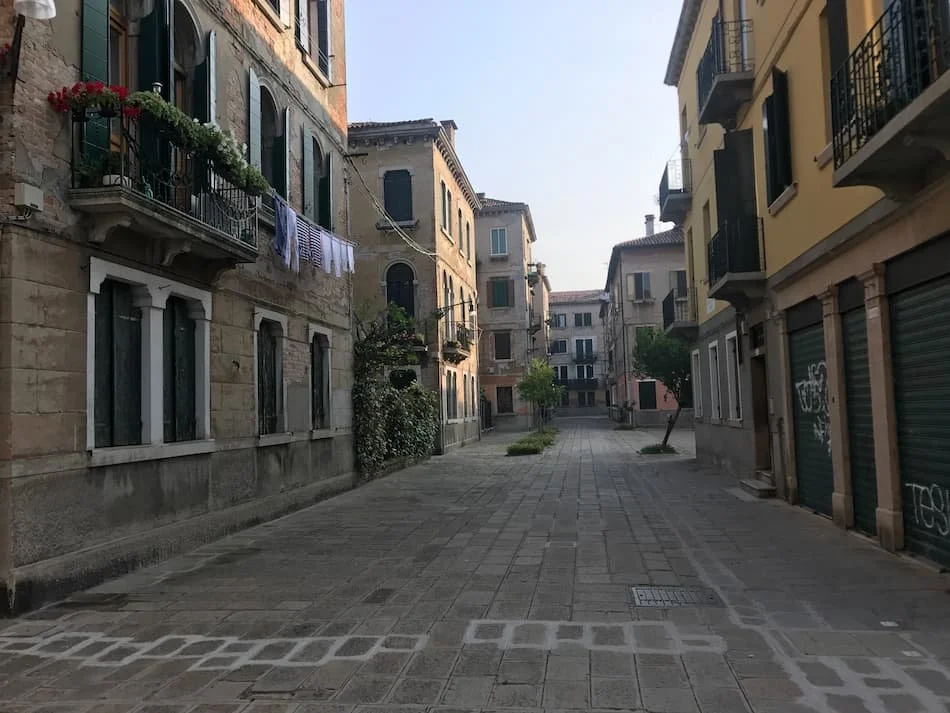
Cannaregio and Castello (the head and tail of the fish) are both working-class districts with the largest populations of Venetians.
As is my custom, I prepared for our adventure with the degree of zeal one might associate with, say, overthrowing a small government; a crusade that led me to the working-class district of Cannaregio. And if what I’d read of Venice’s history so far persisted, it seemed a fitting place to begin my quest.
In his tiny but enlightening chapbook, How Was Venice Built? author Giovanni Distefano describes how the eight-year war between 1508 and 1516 helped to shape Venice. Emerging victorious from battle against a military coalition that included no less than the Holy Roman Empire and Papal States, he writes that “Venice turned out to be especially loved by her subjects, particularly the more humble ones.” As I steal a glance at two middle-aged, chain-smoking locals, a voice inside says this holds true.
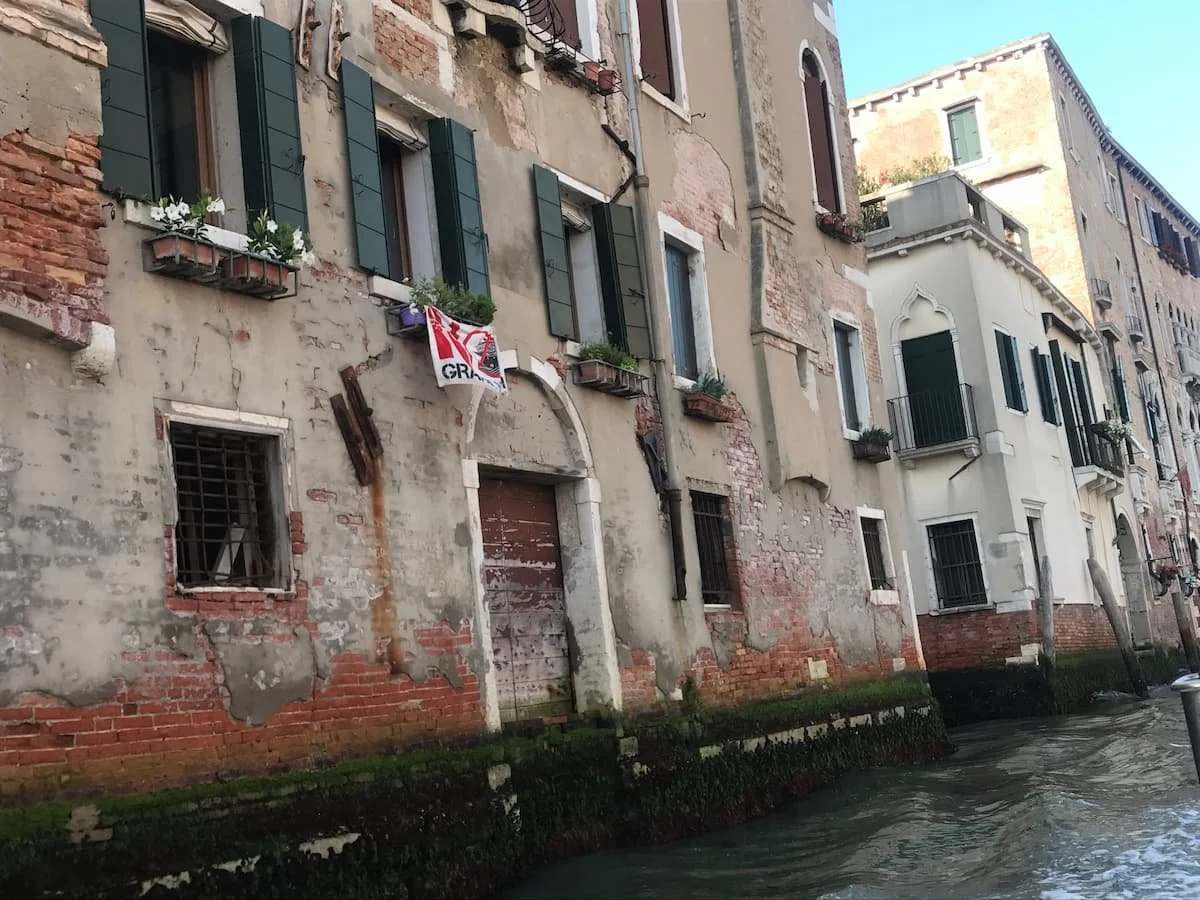
Across the way from my flat hangs a sign that reads, “No Grandi Navi” or “No Big Ships.”
Upstairs I throw open our windows onto the Rio Della Sensa canal, which smells like a wet garden. Across the water, a flag trumpets “Venezia e Laguna” from a balcony. A reference in part to the city’s plan to dredge a new navigational channel in the lagoon, local citizens often fly them in protest to remind us of a simple truth: the lagoon is the lung that breathes life into Venice.
After walking us through a dizzying garbage and recycling schedule complete with a color-coded spreadsheet, Francesca bids us farewell. Exhausted from traveling, I climb into bed and fall into a heavy, dreamless sleep, waking the next morning to the sight of a gondola drifting by the front window.
TINTORETTO’S WANDERING EYES
Our cozy apartment lies on the first floor of a crumbling rose palace. In the living room, a nearly life-size oil painting of Tintoretto in his Renaissance digs hangs between the two front windows. As his wandering eyes follow me around, I attempt a reassuring look. “I’m a friendly,” I do my best to communicate with my gaze.
Laying out a shirt to dry one afternoon, I spot our neighbor across the way. Draped in a scruffy pink bathrobe and matching hair turban, she’s furiously scrubbing the floor of her balcony raw with an old bristle brush that sounds like nails on a chalkboard. Remarkably, she manages to complete this task whilst keeping her face hidden from a group of picture-happy tourists gathered on the bridge below her.
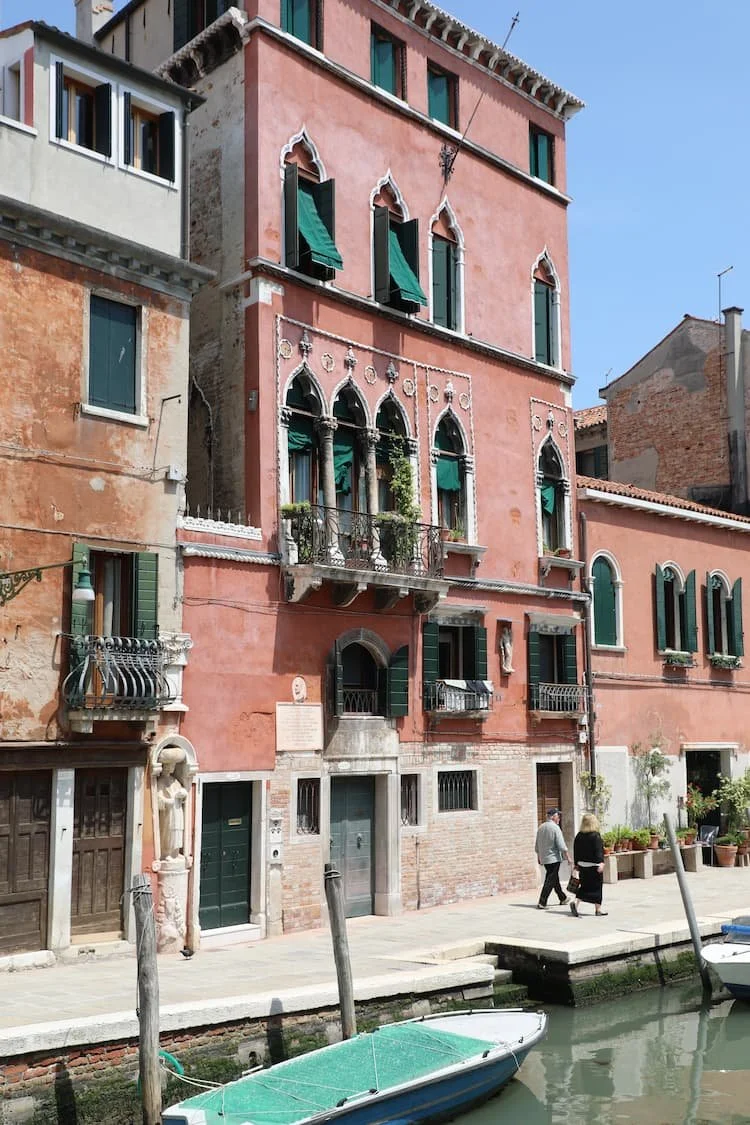
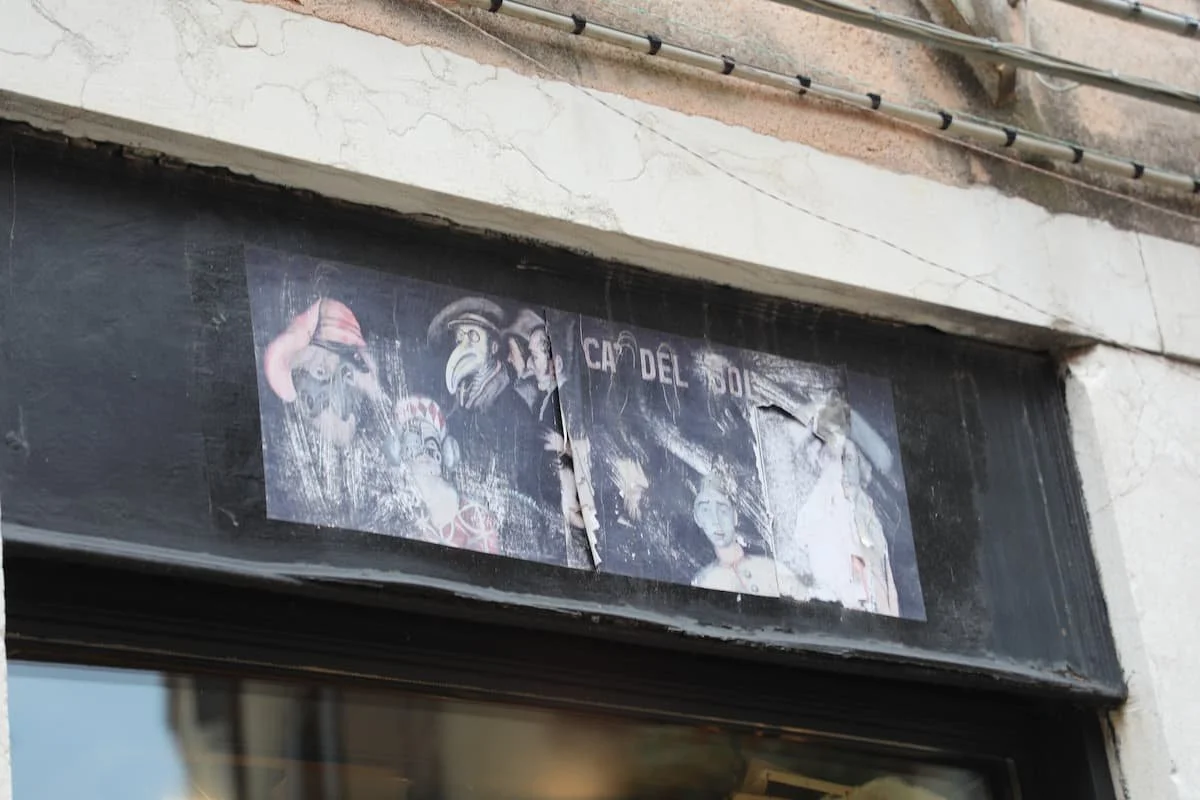
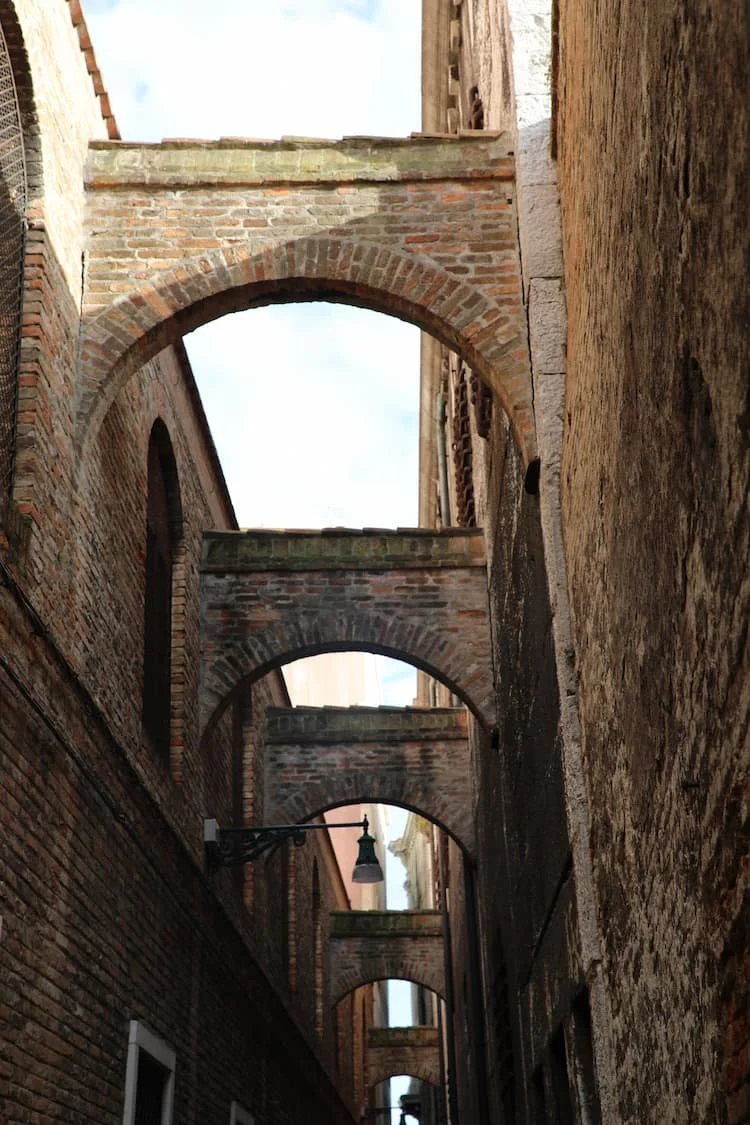
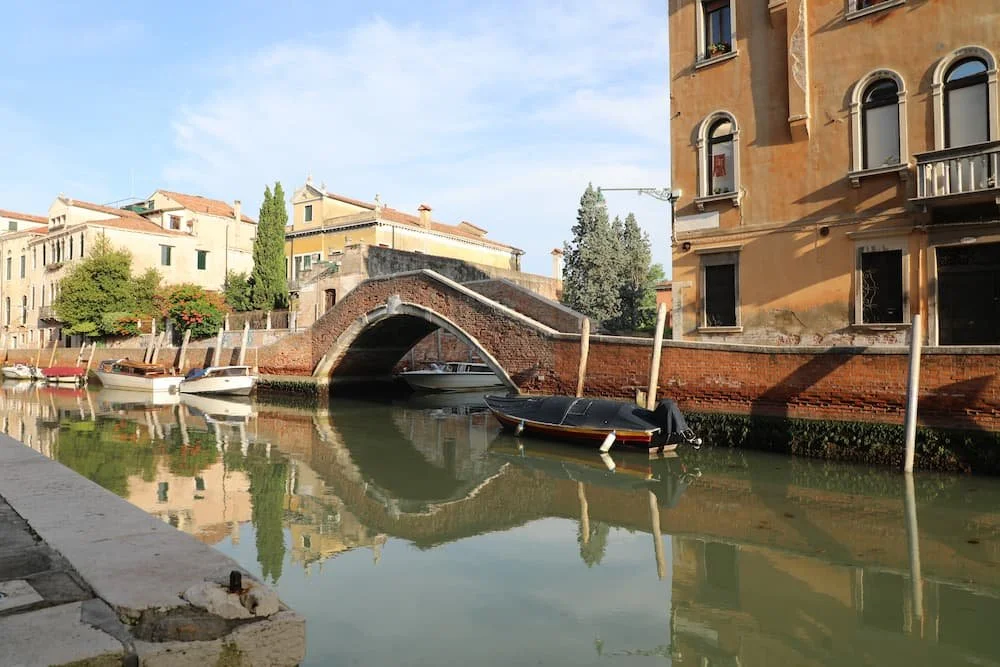
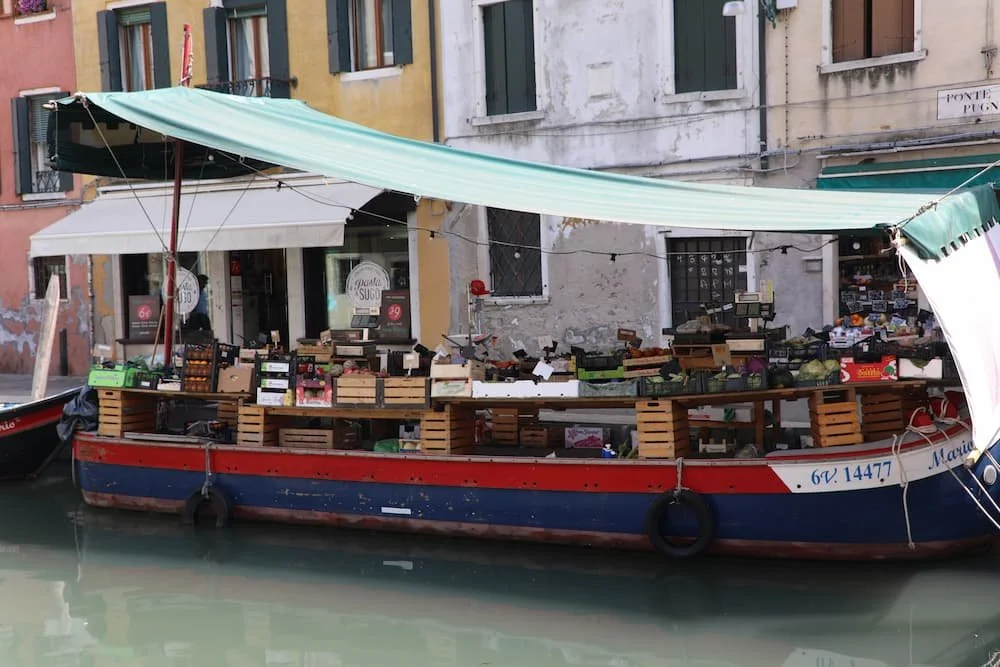
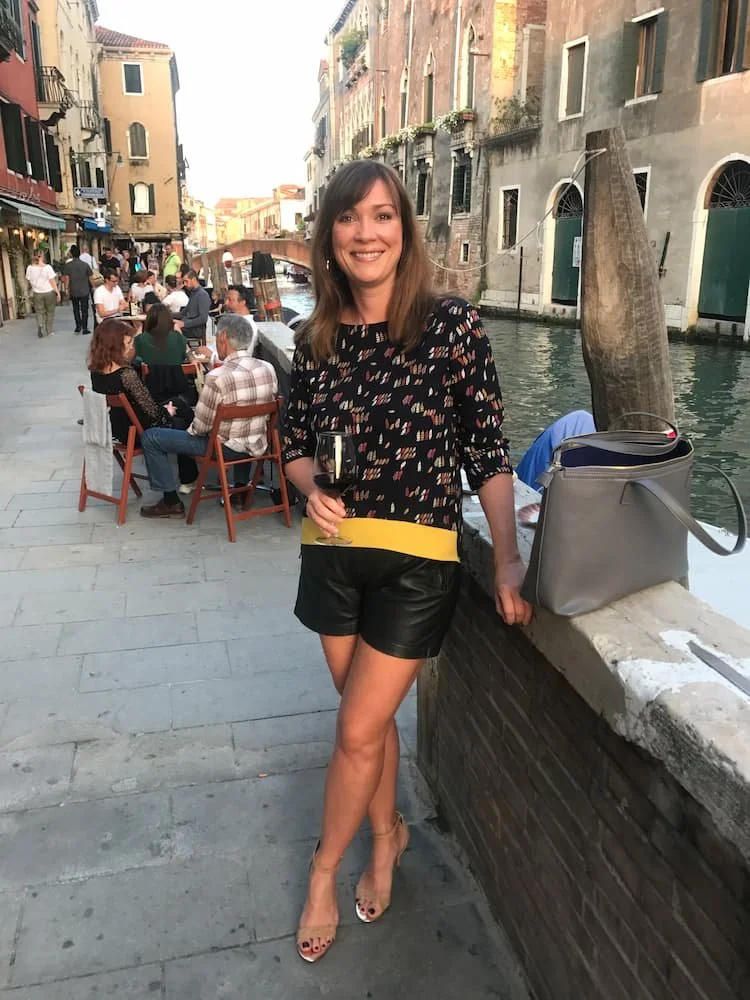
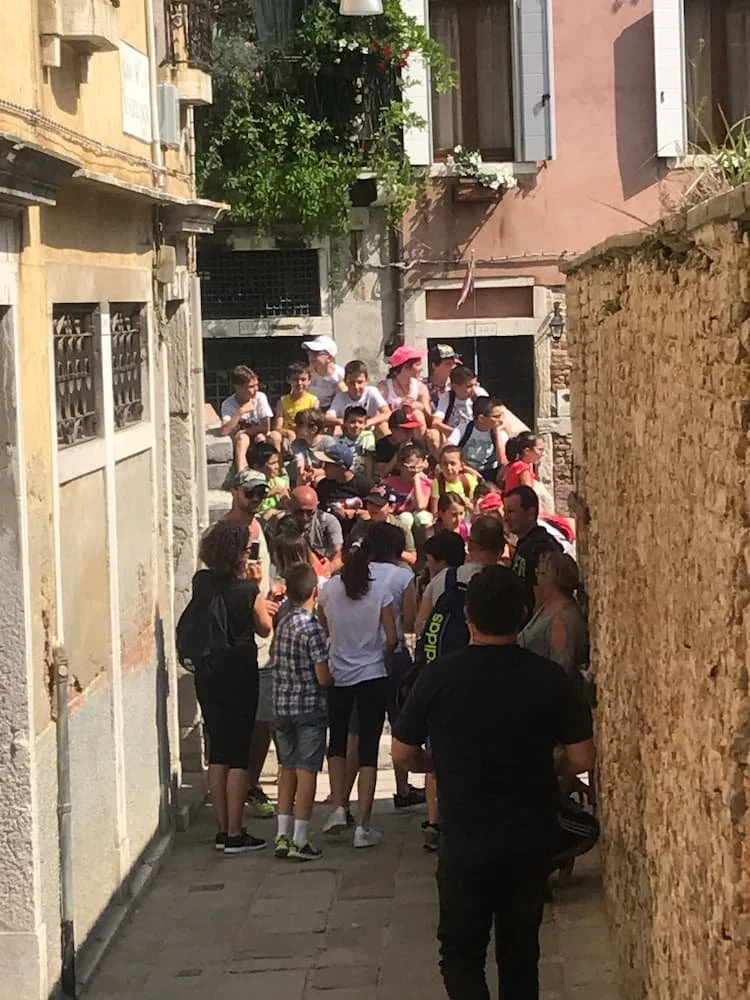
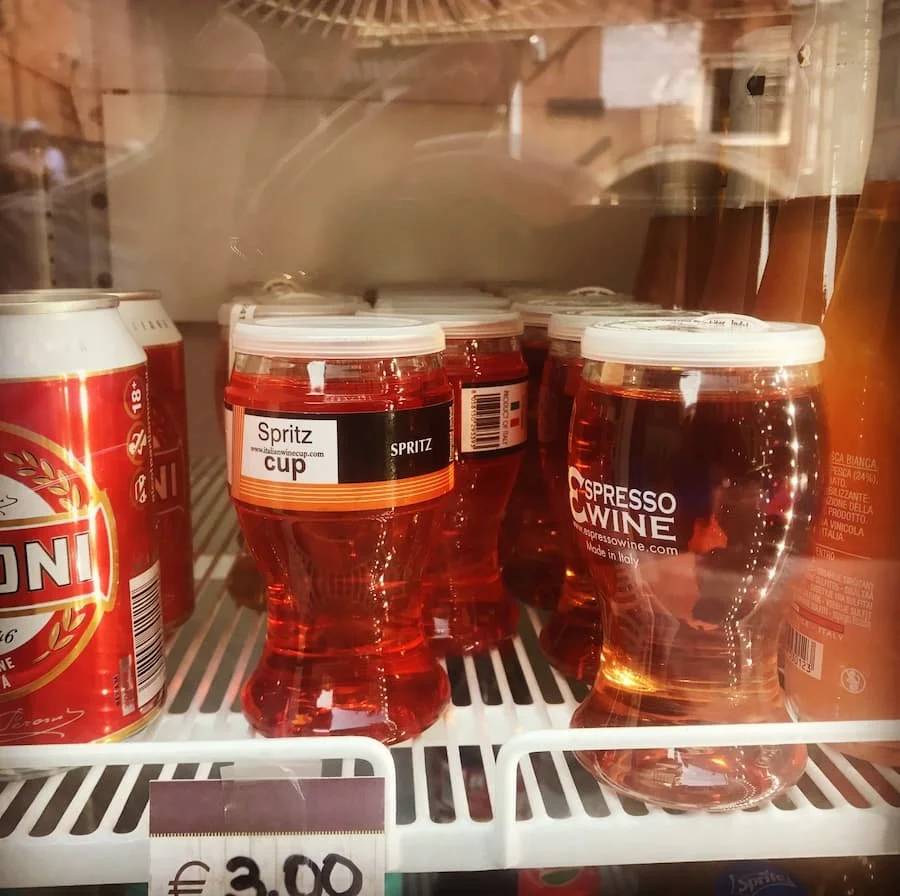
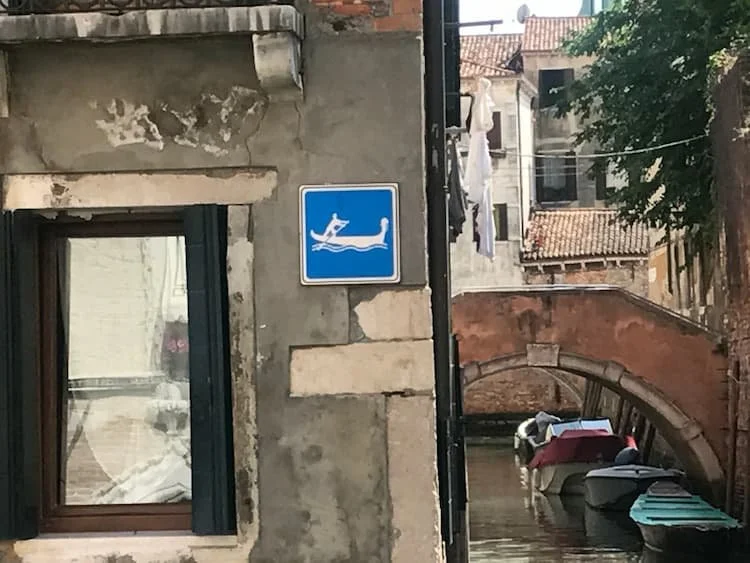
It is a performance repeated over and over again by my neighbors the moment they sense prying eyes, and in the coming weeks I’ll bear witness to a host of creative, if not hilarious, tactics for privacy.
Water pot spouts push curtains aside, sniffing around like elephant trunks as they search for the flower box. Bleached white undies are hung inside and then ferried out on laundry lines like ceasefire flags. It doesn’t take me long to appreciate the lengths residents must go to for a moment of privacy, and I wonder if the two-way mirror is less a disguise and more a survival tactic.
SECRET GARDENS
Walking home from the Jewish ghetto one afternoon, I make a wrong turn and wind up at a hotel entrance. When I duck inside to ask for directions, I am astonished to discover a lavish private garden bordering the seawall. The concierge tells me it is the largest private garden in Venice, and I jump at his kind offer to let me take a peek.
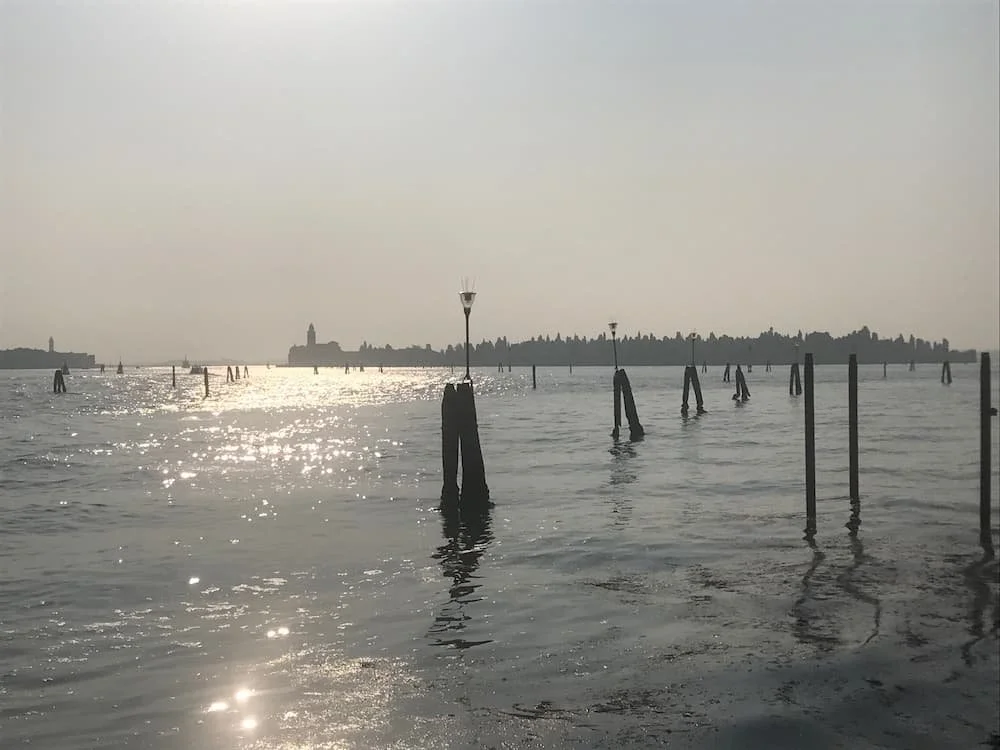
Dawn brings a rare, stolen moment of dazzling calm in the Venetian lagoon.
As I crunch across a winding footpath, I am transported to another world. The air is cooler and smells of damp leaves and tiny, fragrant flowers that bloom out of the lichen. Waves glug against the lip of the sea wall as some locals out for an afternoon row sail by; it’s low tide, and the water, a far cry from the foggy cataracts of the night prior, is clear and glassy.
With all her unexpected hideaways, I ask myself what came first – did a need for privacy cause the Venetians to create these spaces, or did these spaces create the Venetians? Here I come to understand that this is part of what has always drawn people to the labyrinth – the idea that, at any moment, you could stumble across a secret garden.
TRASH TALK
By week three we’ve settled into a daily routine that involves walking, eating, buying books, and mooring ourselves each evening on the ledge outside Osteria dei Mori, which has become our favorite neighborhood haunt — and not just because it’s ten feet from our front door. In fact, it’s our singular break from the carousel of cicchetti bars we’ve been whirling through.
The Venetian solution to tapas, cicchetti is affordable (1-3 euros each), authentic, and available to everyone – the essence, I gather, of all that Venetians hold dear. A mere block away, along the Fondamenta Della Misericordia lies the Las Vegas strip of cicchetti bars. It is here, while washing down plates of creamed cod with uncountable glasses of house wine, that we meet a gondoliere named Jacopo who tells me in no uncertain terms that the only time to see Venice is at dawn. And he should know.
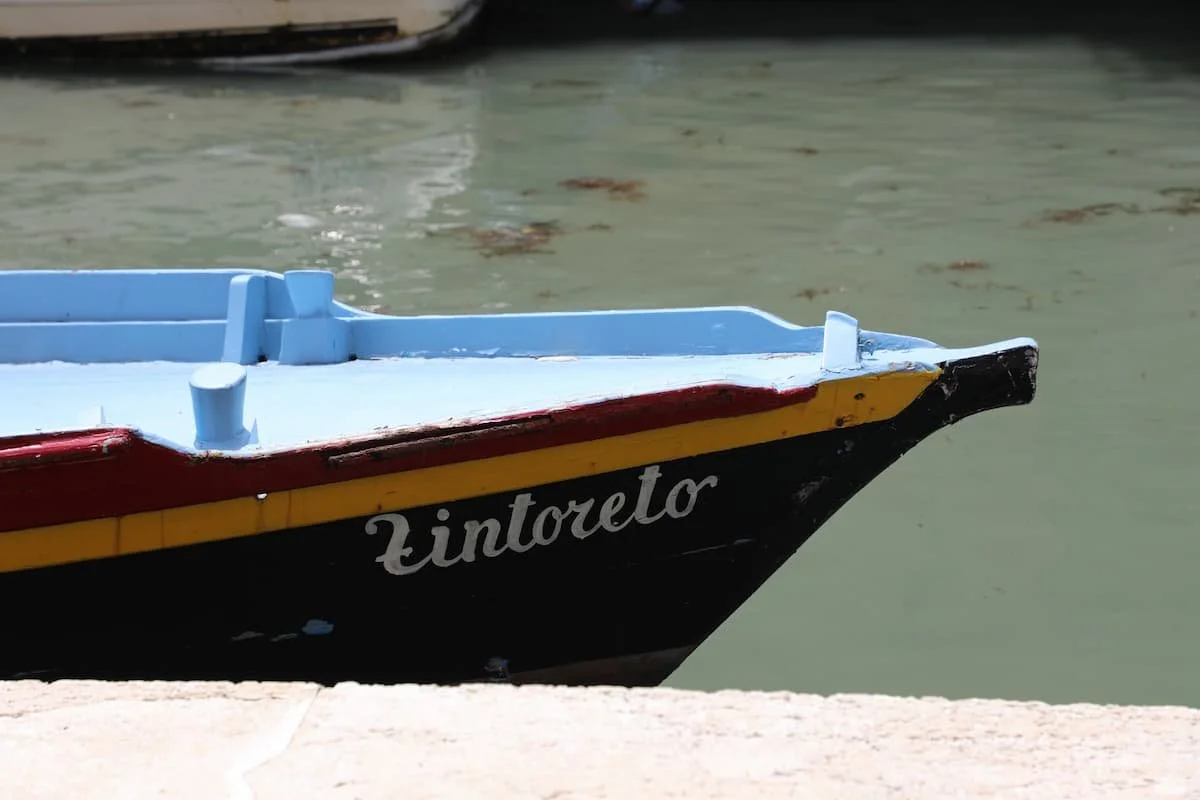
A boat outside my flat boasts the same name as the palace’s famous former resident.
At six the next morning, I realize we’re about to miss trash collection hours. Again. Naturally, this is the morning my travel companion, normally an early riser, refuses to leave bed. I contemplate our near-bursting bags of rubbish, knowing full well we can’t leave it another day with the blast furnace raging outside. Besides, Tintoretto is watching, and I feel guilty.
But what begins as a grumpy outing turns into the ultimate extravagance as it sinks in that the streets are empty and I have the city to myself. For three hours, I wander with no purpose, taking in my neighbors' morning routines.
Like many before me, I too have fallen under Venice’s spell. But mine is a Venice fever of a different sort. With all threatening her, I now see how her most humble subjects remain her most ardent protectors, and it moves me deeply.
More than a beautiful woman that everyone loves to admire, the real Venice is the girl next door.
I am so pleased to have met her.
A 360-degree view of a picturesque canal pouring straight into the lagoon.
No AI was used in writing any part of this blog. All material is the author’s sole intellectual property.
CANNAREGIO
Favorite Discoveries:
Intensive art classes held in Tintoretto’s old palace.
A wildly popular local Osteria run by Mikael “the Venetian” and Lorenzo “the Sicilian.”
Evening rowing lessons on the Grand Canal with Row Venice, a non-profit organization of (almost) all female rowers.
(Remarkably, all of these discoveries happened to be located within a block of my flat, AKA: Tintoretto’s former art studio.)
RIMANI QUI:
Views on Venice – A company specializing in apartments for short-term rentals, the impressive selection offered by VOV appeals to all budgets with their roster of hand-selected apartments ranging from private villas to studio apartments. With choices like Tintoretto’s former art studio, it’s hard to argue with living like a local.
The Secret Garden – Aptly named, one could be forgiven for walking by The Secret Garden without giving it a second glance. Located at the very edge of Cannaregio, this spectacular hotel and restaurant (also known as Hotel Palazzo Abadessa) is home to the largest private garden in all of Venice.
Hotel Heureka – Like your hotels boutique with a reading room and lots of art on display? Look no further than this 5-star jewel. With a tagline like “Hureka – I’ve Found It!” you know this hotel is going to be worth getting lost to find it.
MANGIARE:
Osteria L’Orto Dei Mori – Undoubtedly the friendliest Osteria in Cannaregio, this charming neighborhood eatery is run by affable Sicilian chef Lorenzo and his equally charming partner, Venetian-born and bred Mikeal, who serve up plenty of smiles along with local Venetian cuisine that will appeal equally to your stomach and your pocket.
Osteria Da Rioba – You’ll probably need reservations to dine at this local haunt. Wildly popular and deservedly so, mother and son serve up striking plates of seafood and other authentic Venetian fare.
Osteria al Bomba – Often bypassed entirely for their fairer cousins along the Fondamenta Misericordia, this husband-and-wife team serves up some of the most wonderful seafood-based cicchetti in town. Just be careful not to fall into the squat toilet after your spritz.
BERE:
Il Remo d’Oro – The defiant Venetian spirit is in full swing at this popular neighborhood haunt. Here you’ll find dreadlocked and tattooed locals wearing t-shirts that say things like “+ Cabernet - Internet.” The smoked ham is a house specialty.
Vino Vero – A veritable orgy of wines is on display at this eccentric, lively little wine and cicchetti bar. Check out the sparkling red wine if you haven’t already.
FARE:
Row Venice – An impossibly wonderful experience, this non-profit organization of (almost) all female rowers will steer you in the right direction.
Bottega Del Tintoretto – Intensive, 5-day courses in Drawing, Oil Painting, Watercolour, Printmaking, Lithography, and Watercolour Drawing.
COMPRARE:
Gioielleria Artigianale Carbonich – A goldsmith’s workshop that specializes in traditional Venetian handmade jewelry; he has a wonderful selection of watches.